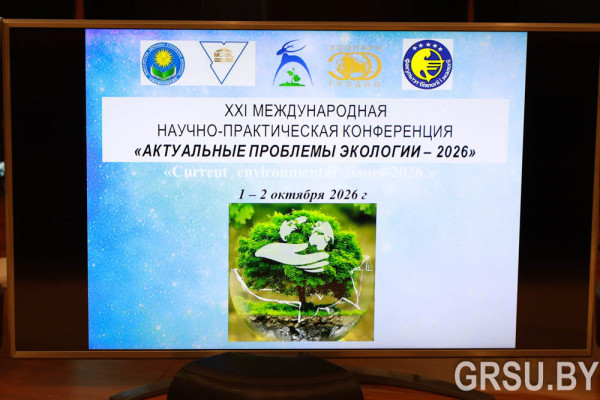
XXI International Scientific and Practical Conference "Current Issues in Ecology – 2026"
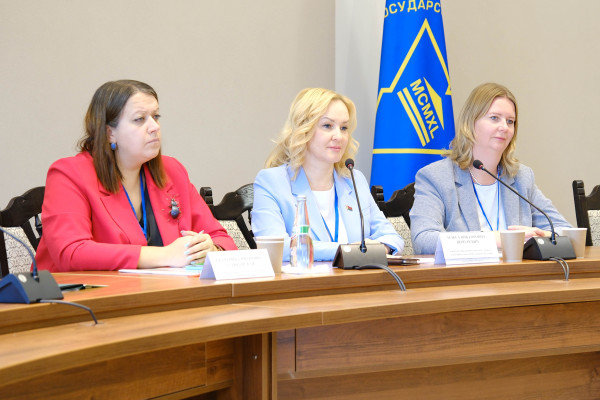
From October 1 to 2, Yanka Kupala State University of Grodno is hosting a major scientific forum, bringing together over 100 scientists and experts from 7 countries—including Belarus, Russia, China, and Zimbabwe—in both in-person and online formats. Over the course of two days, participants will present papers on key issues concerning environmental protection, climate management, and biodiversity conservation, with discussion sessions taking place both at the university and at the Grodno Zoological Park.
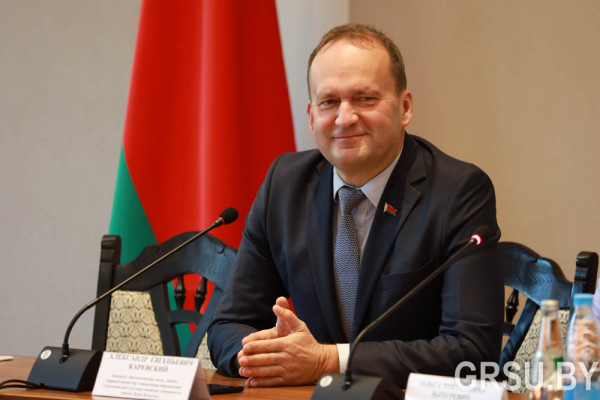
The event was opened by the university’s First Vice-Rector, Alexander Karevsky.
"For the 21st time, leading scientists from around the world are gathering at our university to discuss the most pressing issues in ecology, modern biology, and the contemporary world. It is an excellent opportunity to meet with colleagues, exchange views, and explore solutions to critical challenges, as well as to learn about legislative changes, educational innovations, and biochemical research."
Notably, the conference includes the participation of Qilu Normal University, with which Yanka Kupala State University has recently established a joint Institute of Intelligent Sciences and Engineering.
Daiyong Cui, a member of the Joint Management Council and Dean of the Faculty of Life Sciences at Qilu Normal University, addressed the participants. In his remarks, he highlighted the value placed on the joint project with Yanka Kupala State University and commended the high standard of academic training provided to Chinese students by the university’s faculty. Furthermore, Daiyong Cui outlined key environmental challenges facing China and emphasized the importance of uniting the scientific community to address global issues.
The conference also featured presentations from representatives of the Mytishchi branch of the Bauman Moscow State Technical University (a federal state autonomous educational institution of higher education). Participants included representatives from the Institute of Mathematical Problems of Biology of the Russian Academy of Sciences (a branch of the Keldysh Institute of Applied Mathematics); the Tajik National University; Harare Polytechnic (Zimbabwe); the Syktyvkar Forest Institute; the Scientific and Practical Center for Bioresources of the National Academy of Sciences of Belarus; the Belarusian State University (BSU); Belovezhskaya Pushcha National Park; Grodno State Medical University; the V. F. Kuprevich Institute of Experimental Botany of the National Academy of Sciences of Belarus; the Institute for Plant Protection of the National Academy of Sciences of Belarus; and others.
This year’s conference program covered key areas of modern environmental science, including air pollution monitoring and contemporary climate management methods; the rational use of water resources, wastewater treatment, and the reclamation of degraded land; the sustainable use, conservation, and restoration of flora and fauna; the assessment of environmental factors' impact on living organisms; and the development of ecotourism and educational activities within landscape reserves and protected areas.
The second day of this major scientific forum, organized by Kupala University, featured breakout sessions held at the Grodno Zoological Park. Scientists and environmental practitioners from various countries focused on specific applied developments and strategies for environmental protection.
Conference participants moved beyond discussing environmental challenges to implementing concrete regional initiatives aimed at achieving the region’s sustainable development goals. These initiatives include developing a system for environmental education and public engagement—with a particular focus on youth—by leveraging the combined resources of the Grodno Regional Executive Committee’s Main Directorate for Ideological Work and Youth Affairs, the education and science sectors, and public environmental organizations. According to Olga Yanchurevich, chair of the conference organizing committee and Dean of the Faculty of Biology and Ecology at Yanka Kupala State University of Grodno, the conference addressed the sustainable development strategy for the Grodno Region through 2040, as well as issues related to continuous environmental education.
"One practical avenue could be the creation of a network of partner environmental hubs based at educational institutions and specially protected natural areas. Such hubs could integrate essential environmental monitoring, research projects by school and university students, educational and career-guidance activities, and the promotion of a responsible attitude toward natural resources and the preservation of the region's biodiversity," noted Olga Yanchurevich.
She added that there is significant potential in launching joint projects based on a "territory–education–science–society" model. In this framework, data gathered from monitoring natural sites, biodiversity, and water and air quality would not only serve educational purposes but also form the foundation for practical, locally-based environmental initiatives. This approach makes it possible to begin shaping elements of a regional sustainable development ecosystem today, while simultaneously supporting the implementation of the priorities outlined in the Grodno Region’s Sustainable Development Strategy—namely, environmental sustainability, human potential development, ecotourism, and the rational use of natural resources.
A set of practical recommendations, derived from solutions proposed by conference participants, has been compiled; these can be integrated into the region’s real economy and its environmental protection efforts. Furthermore, the proceedings from the various sessions will be published in a collection of scholarly articles, which will be indexed in leading academic databases.
The international scientific and practical conference "Current Issues in Ecology – 2026," held at Yanka Kupala State University of Grodno, has once again reaffirmed its status as a respected expert forum and a vital hub for scientific and practical dialogue on ecological matters. The ideas and practical recommendations developed by participants during the discussions will serve as a foundation for new environmental projects and help refine methods for ecological monitoring, both within the region and beyond.